Philosophy & Psychology Collecting
A collection of research on the philosophy and psychology behind collecting. Why do we collect? Why do we have this innate desire to build an archive?
Reading into different ideas around the act of collecting I have found an intriguing theory on the occupation of the collector; The collector is providing a physical manifestation or reaction of an internal place of fear or uncertainty. With an accumulative list of the different ways fear can impact ones interaction with object, writer AJ Plai has tapped into the subconscious state of collection. Why do we collect? Why do we place value on objects? Is there power in the amount one collects? Where does this fascination to collect stem from? Why do we all engage with the act of collecting in different ways?
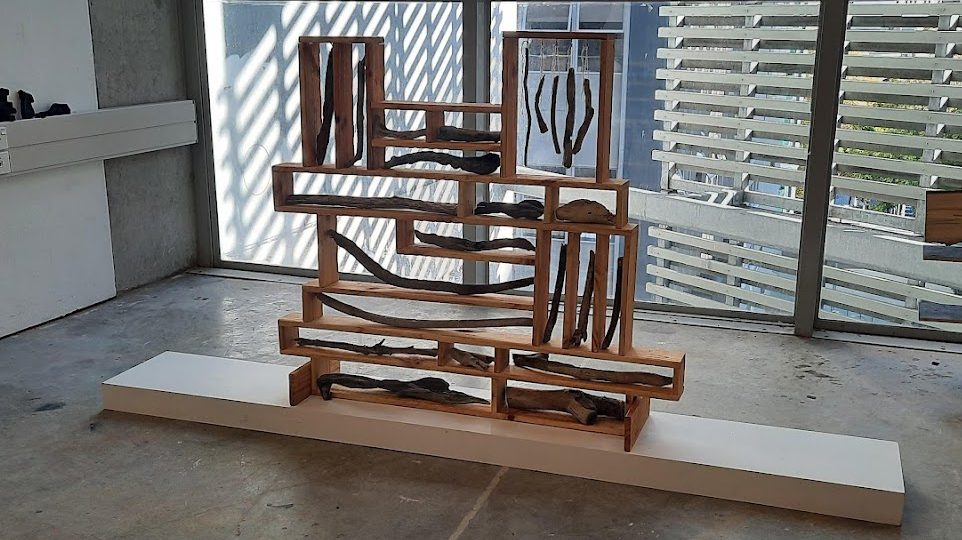
I have included a parts of the article that I find to be most relevant to my relationship with collecting.
The Psychology And Philosophy Behind Collecting
“Fear of Uncertainty & Chaos: Collecting as a mean to create meaning to an otherwise seemingly chaotic world. We as collectors collect by gathering groups of objects that form cohesiveness or relationship between the pieces or to tell a certain story behind those naturally unrelated pieces and thereby forming meaning to the collection. Some collectors form collection in response to certain problems or sense of wonder of the chaos presented in front, and by building a collection the collector is able to tackle that problem. For example, a collector might face the question of “How can I represent the diversity of the Eocene mega fauna of North America?” (problem / chaos) and thus the collector embarks on a collecting quest to gather specimens that would build a complete collection of Eocene North American mega fauna specimens collection (solution / order). The act of collecting creates a collection that in essence, becomes the solution to the collectors dilemma. This, I would also say that is part of our deep rooted human psyche of fear of chaos and the unknown, and thus our instinct is to try to limit the chaos by creating orders (or illusions of order) to an otherwise chaotic world (in our perception at least) much in the same ways as how the early humans banded together, formed groups and created cultures or rituals to face the world’s problems or threats. Collectors on the other hands, tackle the chaos by creating order in the collection and in so doing the collector gains a semblance of power and control over disorganization and chaos.”
“Fear of the Absence of Aliveness: Collecting is without a doubt, a pleasurable pursuit for collector, whereas an audiophile takes pleasure in listening to music, food connoisseur indulges in the enjoyment food & wine, or art aficionado indulge in art appreciation and possession. We collectors induce our senses of aesthetics and pleasure from acquiring and creating collections of objects in order to feel enjoyment. In a way, this could be viewed as related to our fear instinct because we fear to not being able to feel the pleasurable pursuits in life. For we human feel alive when we experience such pleasures, whether the pleasures be from the indulgence of consumable & wearable objects or simply to possess and be surrounded by the things that give us joy like our collections.”
Historian: Walter Benjamin | Collecting
Unpacking My Library – Author W. Benjamin
“Unpacking my Library,” welcomes the reader to peer over his shoulder as he unboxes his personal library. Dwelling on the dusty volumes, Benjamin opens a curtain on the obsessive world of book acquisition. The author is concerned primarily with the personal forum provided by a private library in building self-knowledge. Rejecting normative systems of selection and classification, the personal library for Benjamin appears to be as much a creative medium as it is a solitary intellectual resource.” – By NYPL Staff, October 26, 2020
Historian Walter Benjamin provides a new dynamic to my understanding of collections. Discussing personal collections and the wider society collections. The archival nature of self and community.
The Work Of Art In The Age Of Mechanical Reproduction – Author W. Benjamin
As I bring this research into art making I find W. Benjamin’s essay ‘The work of art in the age of mechanical reproduction’ draws out the idea of ‘An Authentic Collectable’/ An Original.’
This idea around the essence of a creation links into an essay by Heidegger, ‘What is a Thing?’ This essay explores the distinguishes between a thing and scientifically calculated object or material.
What Is A Thing? – Author Martin Heidegger
adding my understanding to the concepts that Heidegger presented in his philosophy’s I found this video work captured an integral basis for Heidegger’s discoveries.
Walking Methodologies

Walking Lab: Research and Creation Project
Walking Lab: “Walking Lab studies and advances the theory and practice of critical walking methodologies through interdisciplinary arts practices and public walking events.” –Stephanie Springgay (McMaster University) and Sarah E. Truman (University of Melbourne)
 BRITNEY SAYWELL